
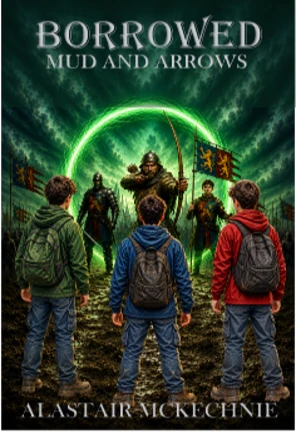
Borrow a body. live the history.
Roderick, Angus and Freddie do not simply travel into the past. Each borrows another person’s body — seeing through their eyes, feeling what they feel and experiencing history from inside a life already being lived.

They are not avatars
The boys can experience everything their hosts do, but controlling them is another matter. Each man has his own memories, loyalties, fears and choices — and even the smallest influence may carry consequences.
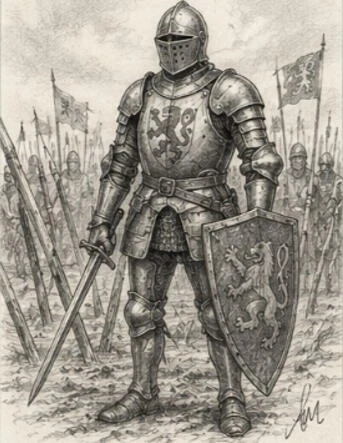
Three boys. three borrowed bodies. one battle.
Roderick borrows the body of English archer John Radwell. Angus wakes inside the knight William Harrington. Freddie finds himself inside Tallbot, a royal herald moving between commanders and armies.
At first, Agincourt feels like the greatest historical game ever invented.
Then the mud deepens. Arrows fall. Horses charge. Armour weighs men down. Fear becomes real.
The boys discover that their hosts are not characters they can simply command.
And when an order is given that none of the boys can accept, surviving Agincourt is no longer the only thing that matters.
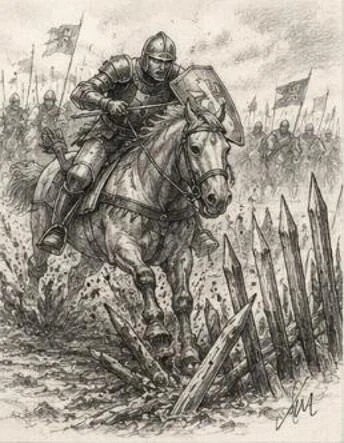
What would you do if history could hear you?
BORROWED turns history into something lived rather than observed.
The boys enter real moments from the past inside other people’s bodies, inheriting their senses, danger and limitations — but never complete control.
They know what history eventually records. Their hosts do not.
That difference creates the real adventure: not only what happened, but what it might feel like to be trapped inside the moment, knowing that even a hesitation, a thought or a choice could matter.
History provides the danger. Borrowing makes it personal.